
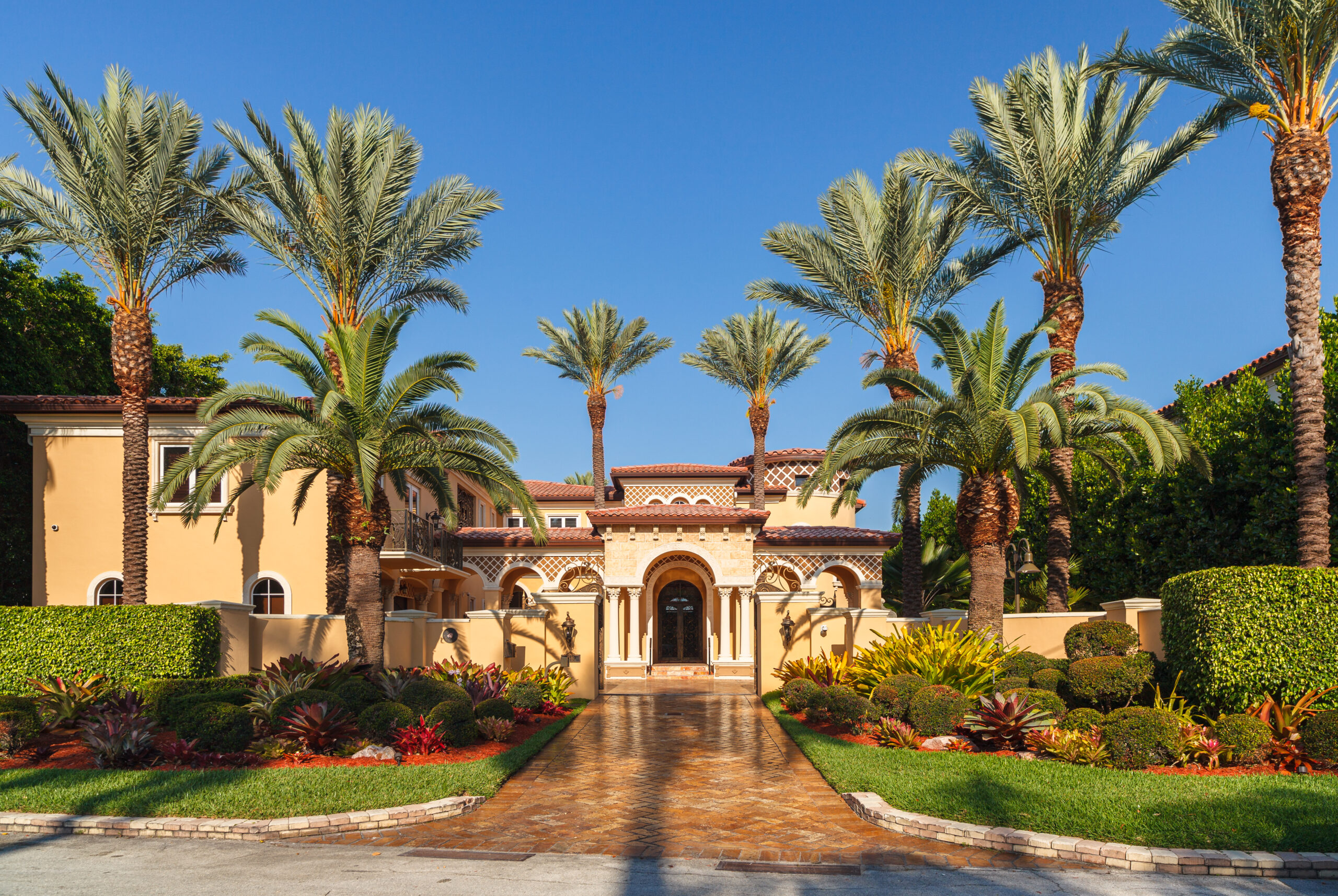
Palm deficiency damage is irreversible. By the time it’s visible, it’s already advanced.
Yellowing fronds, poor new growth, and declining canopy health aren’t problems that appeared overnight. They’re symptoms of nutritional deficiencies that built up quietly over months. Granuly builds programs timed to what palms actually need, before that damage window opens.
No synthetic pesticides. No herbicides. No inputs we wouldn’t be comfortable explaining to you in plain language.
Let’s take a look at your palms
We’ll walk the property, tell you what we see, and explain what we’d do differently, and why. No sales pressure, no commitment required.
Frond damage doesn’t show up when the problem starts. It shows up months later.
Palms store nutrients in their canopy and draw from those reserves over time. By the time a deficiency becomes visible in the fronds, it’s been developing underground for months. Often long enough that some of the damage is permanent. The window to prevent it is long before the window to treat it. That’s the case for proactive, consistently timed palm nutrition rather than reactive care.
What we’d ask before hiring a palm care program.
These are the questions we wish more homeowners asked, and the reasons we built Granuly the way we did.
What’s so different about palm care in South Florida?
Sandy soils drain fast. Heavy summer rain accelerates nutrient leaching. We build programs around those conditions. Not a general palm feeding schedule that ignores the environment they’re actually growing in.
Does timing actually matter, or just the products?
Palms store and use nutrients on a biological cycle, not a calendar one. Applications timed wrong, even with the right inputs, can be largely ineffective. We time everything around how palms actually grow and store.
Do you ever use pesticides, herbicides or toxic chemicals?
No synthetic pesticides. No herbicides. No micronutrients sourced from industrial byproducts. We use only inputs we can fully explain, and we will if you ask.
Will the program be built around my specific palm varieties?
Queen Palms, Royals, Foxtails, Sabals, and Bismarcks each have different nutritional profiles. A single feeding schedule applied across all of them isn’t calibrated care. It’s a guess that happens on a schedule.
Who answers if something looks off between visits?
You talk to the person managing your program. Not a dispatcher routing a call. If a frond starts declining between scheduled visits, you get a real answer from someone who’s actually been on your property.
Will you look at my palms before recommending anything?
Always. We walk the property and evaluate the species, visible health, and any existing deficiency signs before we suggest a single thing. No program starts before that happens.
Queen Palms, Royals, Foxtails, and Sabals don’t all need the same thing. Most programs treat them like they do.
Each palm variety has a distinct nutritional profile, a different sensitivity to deficiency, and a different response to South Florida’s conditions. Queen Palms are particularly vulnerable to potassium and magnesium deficiency. Foxtail Palms are called “among the most needy” of all palms by UF/IFAS extension. Bismarck Palms need different micronutrient ratios than most off-the-shelf fertilizer blends account for.
We build programs around the specific varieties on each property, delivering the right inputs at the right intervals to support stronger frond development, better color consistency, and long-term canopy health. Not as a generic feeding, but as care that accounts for what’s actually growing there.
The right nutrients applied at the wrong time produce the wrong results.
Palms take up and store nutrients according to their own biological cycle, not a quarterly service schedule. Sandy soils drain those nutrients fast, and heavy rainy-season downpours accelerate the leaching. Without applications timed to match how palms actually absorb and store, even well-formulated fertilizers underperform. That’s the detail most programs skip.
Different palms. Different deficiencies. Different programs.
What a Queen Palm desperately needs is wasted on a Bismarck. What shows up first on a Sylvester looks different from what shows up first on a Coconut. Here are the palms we work with most often, and how we think about each.
Common Landscape Palms
These are the palms found across most South Florida properties: the workhorses that form the landscape’s bones, line the driveways, screen the property lines, and stand on either side of the entry. They’re also the ones most often handed a generic feeding schedule that doesn’t account for what they actually need.
Queen Palm
The most-planted palm in South Florida and one of the most nutritionally demanding. Acutely susceptible to potassium deficiency (yellow-orange spotting on older fronds) and manganese deficiency (frizzled new growth). Standard programs typically under-supply K because deficiency develops slowly in sandy soils that leach it fast. UF/IFAS notes correction can take 2 to 3 years. Prevention is the entire point.
Sabal Palm (Cabbage Palm)
The Florida state tree. Costapalmate fan fronds, deeply rooted, one of the most hurricane-resilient palms in our landscape. Generally low-maintenance, but susceptible to lethal bronzing (a phytoplasma disease currently spreading through Florida) and to manganese deficiency. Often planted and forgotten, then declines slowly from cumulative deficiency.
Foxtail Palm
Distinctive plumose fronds shaped like a fox’s tail, one of the most popular accent palms in our region. UF/IFAS extension explicitly calls foxtails “among the most needy” of all palms, particularly for potassium and manganese. By the time fronds look obviously wrong, the deficiency has been developing for months.
Areca Palm
The default clustering palm in South Florida, used for screens, hedges, and accent. Yellow-tinged stems, multi-trunk form, fast-growing. Highly susceptible to potassium deficiency, which is what most yellow fronds on an Areca actually are. The mistake most programs make is treating Arecas like shrubs. They’re palms, with palm-specific nutritional realities.
Specimen & Estate Palms
The palms you actually noticed when you bought the property. Royals lining a drive, a Bismarck holding court near the entry, Sylvesters anchoring a circle, Coconuts framing a view. Major specimens are substantial investments and significant property features. They deserve programs built around what each species actually is, not what’s easy to apply across all of them.
Royal Palm
The iconic specimen palm of Palm Beach County. Native to South Florida, smooth gray trunk, bright green crownshaft, massive scale. Not susceptible to lethal yellowing or lethal bronzing. Main vulnerabilities are nutritional, particularly manganese deficiency, plus occasional pressure from the royal palm bug. Scale matters: surface applications often don’t reach the deep root zone of an established Royal.
Bismarck Palm
Distinctive silver-blue palmate fronds, dramatic form, often used as a focal-point specimen on estate properties. More drought-tolerant and cold-hardy than most ornamental palms. Slow-growing and sensitive to both potassium and manganese deficiency. Often planted as the centerpiece of a landscape design and then never given the calibrated program it actually needs.
Sylvester Palm
Diamond-cut trunk, silvery-green pinnate fronds, popular as an estate accent or driveway lining. Susceptible to lethal bronzing and to magnesium and manganese deficiencies. Phoenix-genus palms decline fast once symptomatic: UF/IFAS documents spear-leaf collapse with only a fraction of the canopy discolored. Prevention through consistent nutrition is the actual play.
Coconut Palm
The iconic palm of South Florida and the main host of lethal yellowing, the phytoplasma disease that wiped out much of the state’s coconut population starting in the 1970s. Also notoriously sensitive to potassium deficiency, which shows up as “pencil-pointing” of new fronds and eventual canopy collapse. Maypan and Malayan Dwarf cultivars are more resistant. Older Jamaica Talls remain the most vulnerable.
We read the fronds. Not just the dirt around the trunk.
Most plant programs lead with soil testing. With palms, that’s the wrong tool. UF/IFAS specifically notes that soil analysis is not particularly useful for diagnosing palm nutrient deficiencies, because palm symptomology often bears little resemblance to soil nutrient profiles. We evaluate the canopy itself, looking for the specific deficiency patterns each species displays, and sample frond tissue when something looks off. That’s how palm diagnosis is actually supposed to work.
Palms that look the way they should, and stay that way.
Here’s what we’re working toward, and what we’d tell you to watch for as a genuine measure of whether the program is doing its job.
Greener, Fuller Frond Development
Consistent, well-timed nutrition helps palms produce new fronds that are greener and fuller, and reduces the yellowing and tip burn that signals deficiency and stress building in the canopy.
Stronger Root & Trunk Structure
Root-zone inputs that support deeper establishment and stronger trunk development, which matters for long-term health and, in South Florida, for how well palms hold up through storm season.
Staying Ahead of the Damage Window
Because palm deficiency damage shows up long after it starts, the value of a consistent program is in what it prevents. Not just what it corrects. Fewer intervention cycles, less recovery time, healthier palms long-term.
We look at your palms before we recommend anything.
No pre-loaded proposals, no generic programs pulled from a menu. Every Granuly Palm Care program starts with an evaluation of the specific palms on your property. The right program depends entirely on what’s actually growing there.
Walk the property and evaluate the palms before anything else.
We assess the species on your property, current frond health, visible deficiency signs, and site-specific growing conditions. Nothing is recommended until we understand what we’re actually working with.
The right inputs, timed to how palms actually grow and store.
Applications are calibrated to species, growth cycles, and South Florida’s seasonal conditions. Not a fixed quarterly visit that ignores whether the timing is actually right for the palm to absorb and use what’s applied.
A program that improves alongside your palms.
We track canopy response over time and refine accordingly. The goal is palms that need fewer interventions as the program compounds. Not a fixed service schedule that runs the same way regardless of how the palms are actually performing.
Palms that perform. Not just ones that get serviced.
- Greener, fuller fronds with reduced yellowing and deficiency symptoms
- Stronger root and trunk development through soil-first, timed nutrition
- Proactive programs that stay ahead of the damage window rather than responding to it
- Species-specific care calibrated to the actual palms on your property
- A cleaner program: no synthetic pesticides, no herbicides
This program is a good fit if…
- Your palms are showing yellowing fronds, poor new growth, or canopy decline
- You have specimen or accent palms that are a significant part of your property’s character
- You want care that actually accounts for what your specific palm varieties need
- You’d rather prevent damage than try to recover from it once it’s already visible
And what we actually say.
Why are my palms turning yellow?
Yellowing fronds in South Florida palms almost always indicate nutrient deficiency, most commonly potassium, magnesium, or manganese. Sandy soils and heavy rain leach these nutrients quickly, and without consistent replenishment timed to how palms absorb them, deficiencies build until they become visible. By then, some of what you’re seeing is already permanent in those fronds.
What’s the difference between lethal yellowing and lethal bronzing?
Two different phytoplasma diseases, with different host palms. Lethal yellowing primarily threatens Coconut Palms and Christmas Palms (Adonidia). Lethal bronzing primarily threatens Sabal, Sylvester, and other Phoenix-genus palms. Both spread through insect vectors and have no field cure once symptoms appear. Royal Palms and Foxtail Palms are not currently on either susceptibility list. We’ll identify what your property has and what the realistic risk picture looks like.
Is this just fertilization?
Palm fertilization is the core of the program, but the approach is built around the specific varieties on your property, timing applications to biological growth cycles rather than calendar dates, and tracking how the palms actually respond over time. A routine quarterly fertilization and a calibrated palm nutrition program can use similar inputs and produce very different results.
What palm types do you work with?
We work with the palm varieties most common to South Florida properties, including Queen, Royal, Foxtail, Sabal, Bismarck, Sylvester, Coconut, and Areca. Programs are calibrated to the specific varieties on your property. We’ll go through that in detail at the assessment.
Do you use pesticides or herbicides?
No. The program is focused entirely on nutritional care. No synthetic pesticides, no herbicides, and no re-entry windows to manage after we leave. Everything we apply we can explain plainly, and we will if you want to know.
How often are palms treated?
Application frequency is determined by the species and the program level selected, not a fixed calendar. Timing is built around seasonal growth cycles and when palms can actually take up and store what’s applied. We’ll walk through the specifics at the assessment so you know exactly what to expect.
My palms already look bad. Is it too late?
Often no, but the answer depends on what’s happening and how far along it is. Existing frond damage is permanent, but we can stop further decline and support healthier new growth going forward. Schedule a free assessment and we’ll give you a clear picture of where your palms actually stand and what realistic improvement looks like from here. We won’t oversell it.
Do you do soil testing for palms?
For palms specifically, the gold standard is leaf tissue analysis, not soil testing. UF/IFAS notes that palm nutrient symptomology often bears little resemblance to soil nutrient profiles, which is why frond evaluation and tissue sampling tell a clearer story than dirt around the trunk. We use soil testing where it adds value and leaf-based evaluation as the primary diagnostic. Different tool for a different plant.
We’ll tell you what’s actually going on with your palms, and what we’d do about it.
No obligation, no hard sell. Just a walk through your property and a straight answer about what’s causing the decline, and whether a program can realistically turn it around.