
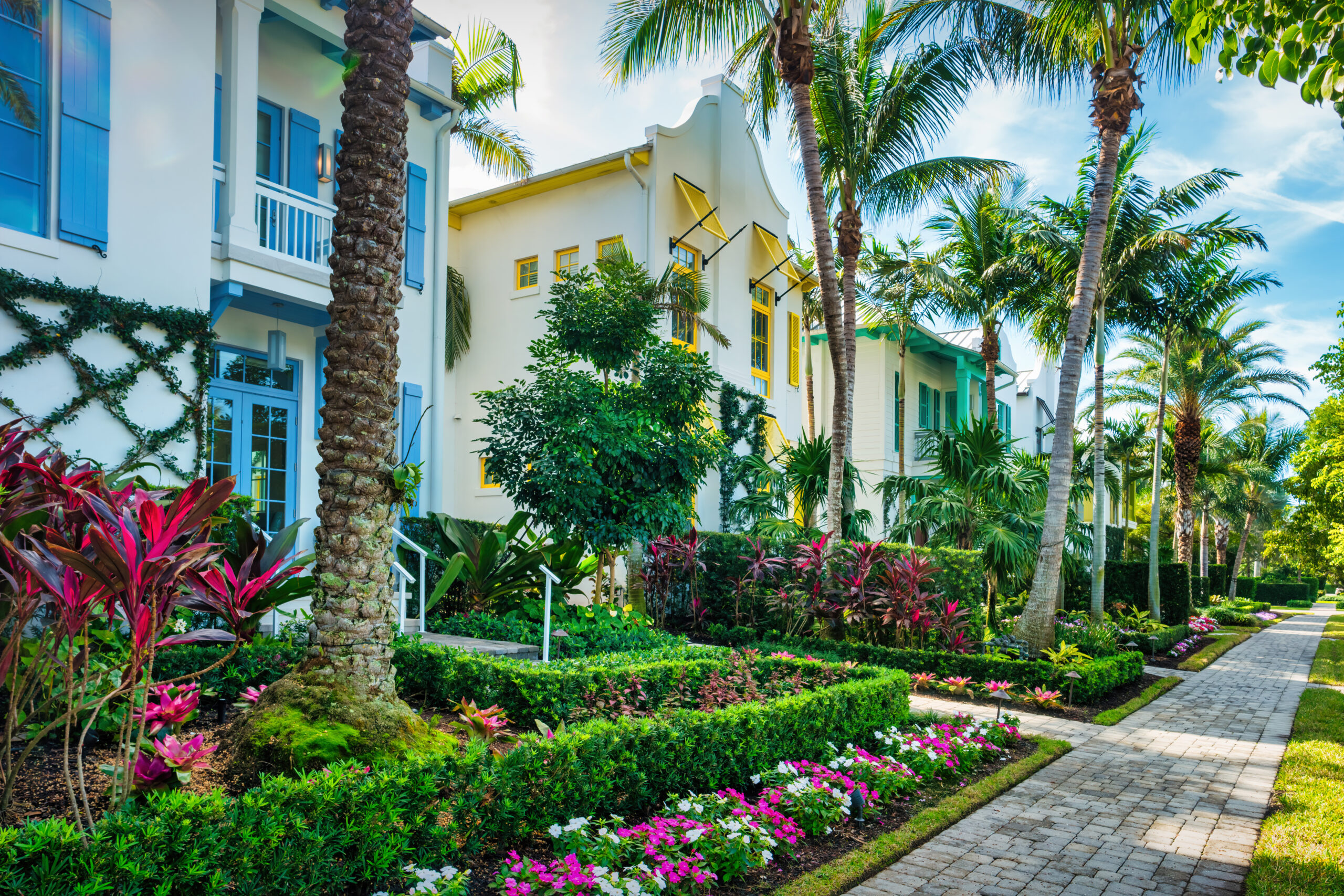
Your beds looked great the week after installation. Here’s why they don’t anymore.
New plants bloom on the nutrition packed into their nursery growing media, which depletes within weeks of being planted into South Florida’s sandy soils. Without a program that replenishes what the ground can’t hold, the color and vigor you paid for gradually disappears. That’s the pattern, and it’s almost always correctable.
No synthetic pesticides. No herbicides. No inputs we wouldn’t be comfortable explaining to you in plain language.
Let’s take a look at your beds
We’ll walk the property, tell you what we see, and explain what we’d do differently, and why. No sales pressure, no commitment required.
South Florida looks easy to garden in. For ornamentals, it’s one of the harder environments there is.
Intense UV fades color. Heavy summer rain leaches nutrients before roots can absorb them. Sandy, low-organic soils provide almost no nutritional reserve between applications. And the year-round growing pressure means plants are never fully at rest. Without consistent, targeted nutrition built around what each plant actually needs, even well-chosen, well-installed beds slowly lose what made them worth planting.
What we’d ask before hiring an ornamental care program.
These are the questions we wish more homeowners asked, and the reasons we built Granuly the way we did.
What’s so different about ornamental care in South Florida?
Intense UV, fast-draining sandy soils, heavy seasonal rain, and year-round growing pressure. Our programs are built around those conditions, not adapted from a template designed somewhere else.
Does timing actually matter, or just the inputs?
Flowering plants need support at specific points in their growth cycle, not on a fixed calendar that ignores whether a plant is actively blooming, dormant, or setting new growth. We time applications around how the plants actually work.
Do you ever use pesticides, herbicides or toxic chemicals?
No synthetic pesticides. No herbicides. No micronutrients sourced from industrial byproducts. We use only inputs we can fully explain, and we will if you ask.
Will the program be built around my specific plants?
Plumbago, Allamanda, Heliconia, and Pentas each need different things, and some of them are actively harmed by inputs that help others. We build programs around the species actually growing on your property, not a generic ornamental rotation.
Who answers when something stops blooming between visits?
You talk to the person running your program, not a dispatcher. When a plant changes between visits, you get a real answer from someone who’s been on your property and knows what’s there.
Will you look at the plants before recommending anything?
Always. We walk the beds and evaluate the existing plantings before suggesting a single thing. Your program starts with what’s actually growing there. Not a proposal written before anyone set foot on the property.
High nitrogen suppresses Plumbago blooms. Most programs apply it anyway.
Plumbago bloom-suppresses under high-nitrogen feeding, the same kind of feeding that’s right for most lawns and pushes vegetative growth at the direct expense of color. Allamanda performs best on balanced, lower-nitrogen nutrition and underperforms when fed like a turf border. Pentas and Firebush produce sustained flowering on phosphorus-forward programs. Heliconia needs potassium-heavy nutrition to build the structural strength that supports its inflorescences.
These aren’t minor details. They’re the difference between a bed that performs and one that just survives. We build programs around the specific nutritional profile of each plant on your property, using slow-release fertilizers, biostimulants, and sea kelp applications timed to support actual growth and bloom cycles.
The program feeding your lawn is probably the wrong program for your ornamental beds.
Broad-spectrum lawn fertilizers are high in nitrogen by design. That’s what turf needs. But applied to flowering ornamentals on the same schedule, that nitrogen pushes leafy growth and suppresses bloom in exactly the species homeowners most want to see flowering. A nutritional program built for ornamentals starts from a completely different set of inputs and priorities.
What makes one plant bloom suppresses another. Most programs treat them all the same.
Plumbago bloom-suppresses on exactly the kind of feeding that produces Pentas. Heliconia needs heavy potassium to hold its blooms upright. Lantana production drops off when nitrogen pushes leaves instead of flowers. Here are the plants we work with most often, and how we think about each.
Flowering Shrubs
The woody flowering plants that anchor most South Florida beds. They’re often handed a generic shrub schedule that emphasizes structural growth. The trouble is that the structural-growth program is exactly the program that suppresses bloom in many of these species. Treating them as flowering plants, not as shrubs, is what produces color.
Plumbago
A South Florida workhorse for year-round sky-blue or white bloom, planted as a border, a low hedge, or a foundation accent. Drought-tolerant and heat-loving once established, but bloom-suppressed under high-nitrogen feeding. A nutrition program calibrated to support flowering rather than vegetative growth is what keeps Plumbago producing the consistent color most homeowners planted it for.
Allamanda
Bright yellow trumpet-shaped flowers across a sprawling or upright shrub form, depending on the cultivar. Heat-loving, full sun, and a heavy bloomer for most of the South Florida growing year. Allamanda is one of the most over-fed plants in residential landscapes: too much nitrogen produces vigorous leafy growth and almost no flower. A balanced, phosphorus-and-potassium-forward program produces the dense yellow color it’s grown for.
Thryallis (Galphimia)
A South Florida workhorse for low borders and hedges, with continuous bright yellow flowers across a tidy, mounding form. Drought-tolerant, salt-tolerant, and one of the few flowering shrubs that genuinely earns the “low-maintenance” reputation. Thryallis still responds significantly to consistent root-zone nutrition. Programs that ignore it because the plant “doesn’t seem to need much” miss the difference between a Thryallis that performs and one that just survives.
Lantana
One of the most planted flowering perennials in South Florida and the single biggest pollinator magnet in most landscapes. Multi-colored flower clusters across spreading or upright forms depending on the cultivar. Drought-tolerant and heat-loving, which is what makes it a workhorse, but homeowners frequently get surprised when bloom production drops off after the first season. The fix is usually consistent nutrition timed to support continuous flowering rather than vegetative growth.
Tropical & Perennial Color
The herbaceous flowering plants and tropical accents that produce most of the actual color in a South Florida landscape. These plants live or die on consistent, calibrated nutrition timed to their bloom cycles. They’re heavy feeders but they’re picky about what they want fed, and they reward programs that pay attention to the differences between species.
Heliconia
Architectural tropicals whose pendulous lobster claws and upright torch-shaped inflorescences are South Florida’s most dramatic plantings when properly fed. Heliconia is a heavy potassium feeder and needs structural strength to support those blooms. K-deficient programs produce floppy stems and weak inflorescences. Done right, Heliconia produces the kind of color most landscapes never see.
Bird of Paradise
The plant most homeowners install hoping for the iconic orange-and-blue flower, then wait years to see bloom. Bird of Paradise needs to be mature (typically three to five years from installation), well-fed, and not heavily shaded. The biggest reason plants don’t bloom is inconsistent or under-balanced nutrition, particularly low phosphorus. A species-calibrated program shortens the timeline and supports sustained bloom once flowering starts.
Pentas
Continuous color from one of the few flowering perennials that actually delivers what its label promises in South Florida. Pentas blooms across pink, red, white, and lavender, and pulls pollinators in volume when it’s at peak. Phosphorus-forward nutrition and consistent water support sustained bloom. Pentas is one of the most forgiving plants when a program is dialed in, and one of the most disappointing when it isn’t.
Firebush
A Florida native with bright orange-red tubular flowers that bloom from spring through fall and pull hummingbirds the entire time. Heat-tolerant, drought-tolerant, and forgiving in most conditions. Firebush is generally low-maintenance but responds dramatically to soil-first nutrition. Native installations that look thin and tired and don’t bloom hard are almost always running on the wrong program. Firebush rewards proper soil care.
Most properties run all of this together.
Ornamentals rarely live in isolation. They sit next to lawn, around trees, under palms, alongside hedges. Most properties end up running Ornamental & Landscape Care alongside Turf, Tree & Shrub, and Palm programs so the whole landscape operates on one coordinated calendar instead of four disconnected ones. We’ll walk through what makes sense at the assessment.
Beds that look the way you intended, and keep looking that way.
Here’s what we’re working toward, and what we’d tell you to look for as a genuine measure of whether the program is doing its job.
Richer Color & Longer Bloom Cycles
Plant-specific nutrition that supports more vibrant color and more consistent blooming, instead of the brief flush after installation followed by a gradual fade that most ornamental beds settle into.
Fuller, More Vigorous Growth
Root-zone nutrition and biostimulant applications that build stronger plant structure and denser growth, so beds look full and intentional rather than sparse and struggling.
Consistency Through the Seasons
Programs adjusted through South Florida’s wet and dry seasons to maintain bed performance year-round, not just in the weeks after a fresh planting or a corrective treatment.
We look at your plants before we recommend anything.
No pre-loaded proposals, no generic programs pulled off a menu. Every Granuly Ornamental & Landscape Care program starts with understanding what’s actually growing on your property. The right program depends entirely on that.
Walk the beds and understand what’s there before anything else.
We evaluate the plant varieties, bed conditions, sun exposure, soil quality, and current performance before recommending a single input. Your program starts with what we actually found on the property. Not what we assumed would be there.
The right nutrition, timed to each plant’s actual growth and bloom cycle.
We apply slow-release fertilizers, biostimulants, and sea kelp applications calibrated to what each species needs and when it can use it. Timed to produce results rather than to fit a quarterly service rotation.
A program that improves alongside your beds through the seasons.
We track plant response and refine through South Florida’s seasonal shifts. Care stays aligned with how the plants are actually performing, not running on autopilot regardless of what’s happening in the beds.
Ornamental beds that perform. Not just ones that get serviced.
- Richer, longer-lasting color and more consistent bloom cycles season to season
- Stronger root systems and better plant establishment through soil-first nutrition
- Biostimulant and sea kelp applications timed to actual growth and bloom cycles
- Species-specific care calibrated to the plants actually growing on your property
- A cleaner program: no synthetic pesticides, no herbicides
- Programs designed to coordinate with lawn, palm, and tree care across the whole property
This program is a good fit if…
- Your beds looked great after installation and have been declining ever since
- You want more consistent color and longer bloom periods from your flowering plants
- You’re frustrated with programs that treat ornamentals as an afterthought on a lawn schedule
- You want care that builds plant health over time rather than temporarily masking what’s wrong
And what we actually say.
Why did my plants bloom well after planting and then stop?
New installs bloom on the nutrition packed into the nursery growing media, which depletes within weeks of being planted into South Florida’s sandy soils. Without consistent replenishment, most ornamentals gradually lose the color and vigor they had at installation. It’s the most common pattern we see, and it’s almost always correctable with the right program.
Why do some of my plants bloom more when I water and feed them less?
It’s a real pattern. Plumbago, Allamanda, and a number of other South Florida flowering plants produce more blooms with lower nitrogen and slightly drier conditions. Other species (Pentas, Heliconia, most tropical color) need the opposite: consistent water and balanced nutrition timed to their bloom cycles. A program that doesn’t recognize the difference applies the same approach to all of them, and one group ends up over-fed while the other ends up under-fed. Identifying which group each plant belongs to is part of every walk-through.
What plants does this program cover?
We work with the ornamental flowering plants and tropical specimens common to South Florida landscape beds, including Plumbago, Allamanda, Thryallis, Lantana, Heliconia, Bird of Paradise, Pentas, Firebush, Crown of Thorns, and others. Larger structural woody shrubs and canopy plantings are covered under our Tree & Shrub program. We’ll walk through your specific plantings at the assessment.
How does this fit with the Tree & Shrub program?
They’re different programs focused on different goals. Tree & Shrub handles the structural plants: canopy trees and the larger hedging shrubs that anchor the landscape. Ornamental & Landscape handles the flowering plants and tropical accents whose value is mostly bloom and color. The plant lists don’t overlap, by design. Most properties end up running both together so the whole landscape is on one coordinated calendar.
Do you use pesticides or herbicides?
No. The program is built entirely around plant nutrition and health. No synthetic pesticides, no herbicides, and no re-entry windows to manage after we leave. Everything we apply we can explain plainly, and we will if you want to know.
Can this be combined with lawn, palm, or tree care?
Yes, and it’s designed to. Granuly programs are built to work together across the whole property, so ornamental care coordinates with turf, palm, and tree programs rather than running on a separate, disconnected schedule with different inputs and timing.
How is this different from what my landscape maintenance company does?
Most landscape maintenance companies focus on mowing, trimming, and reactive treatments. Granuly is focused entirely on plant nutrition and long-term health, calibrated to the specific varieties on your property and adjusted based on how those plants actually respond over time. The two can work alongside each other without overlap.
How quickly will I see results?
It depends on the plant and what was happening before we started. Quick-flowering perennials like Pentas can show response within weeks. Bloom cycles on Plumbago, Allamanda, and Lantana typically take a season to fully recalibrate. Long-term shrub and tropical plant health builds over months and years. We’ll tell you what realistic timelines look like for your specific plants at the assessment, not promise instant results.
We’ll tell you what’s actually going on with your beds, and what we’d do about it.
No obligation, no hard sell. Just a walk through your property and a straight answer about what’s causing the decline, and whether a program can realistically turn it around.